

Wednesday evening at Plus X in Slough. Well over thirty people for our latest IoT Collective meetup, this time focused on IoT and agriculture, with two talks and three product stands.
Billy Hill from Studio Matter opened the evening. Studio Matter is an engineering-led industrial design consultancy that works with hardware startups to take products from concept through to manufacture. Billy’s talk focused on the process of building a hardware prototype, specifically the importance of working closely with end users to understand their real needs, the environments the product will operate in, and how to learn, adapt and iterate through that process rather than designing in isolation. He brought it to life with different examples: navigation for the visually impaired and then fertiliser spraying equipment and house plant management. Different scales, different users, but the same underlying discipline of listening, testing and refining.
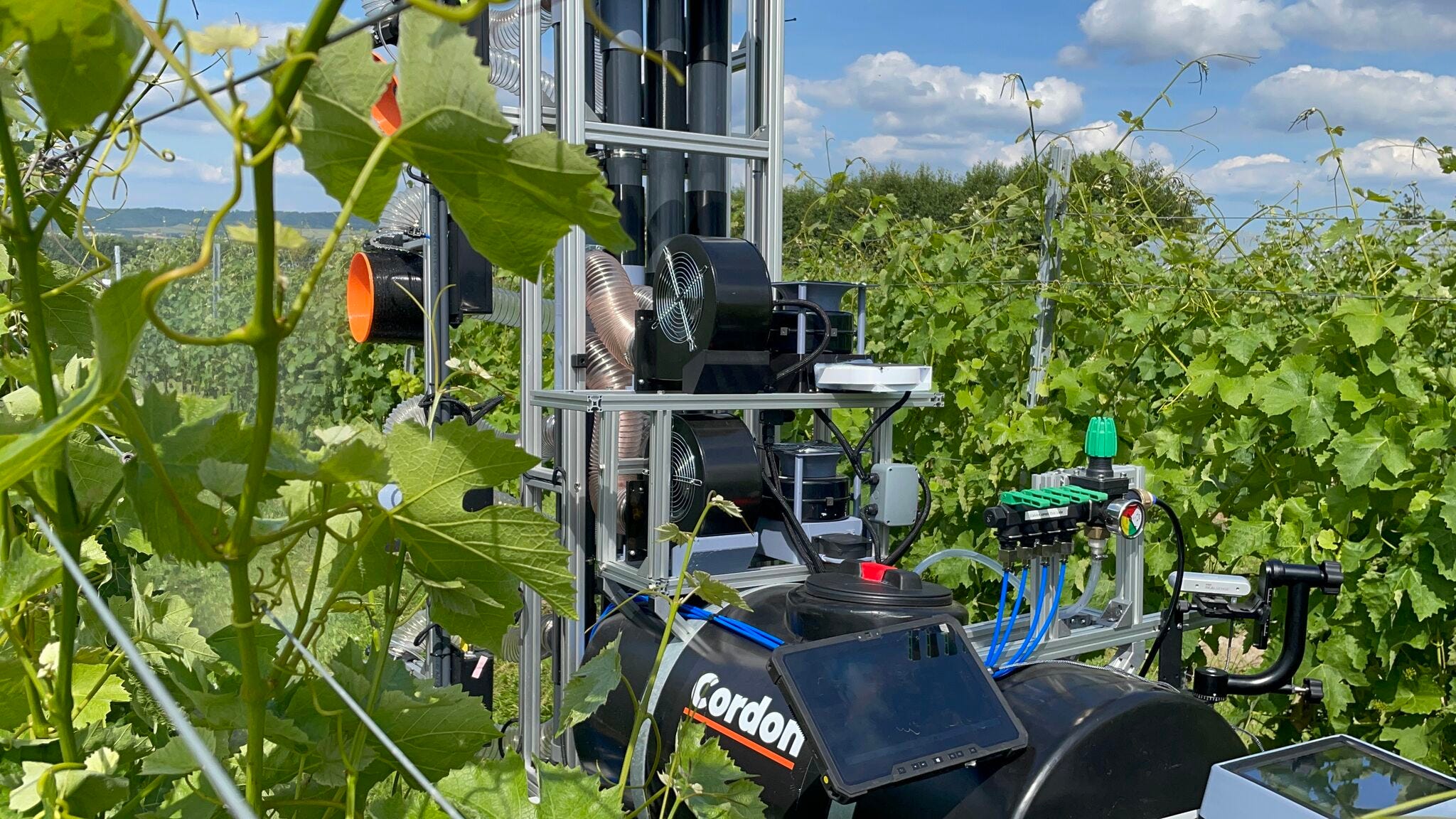
He also talked about what it takes to move from a lab prototype to a device that can survive the realities of a working farm, what Rob Spurrett later described as the “honest growth journey” of ruggedised agricultural hardware. Studio Matter had a stand showing a range of the connected products they’ve designed and taken through to production.
Rob Spurrett, CEO and Co-Founder of Lacuna Space, followed with a look at how AgTech in the UK and globally has evolved over the past year. His core point was that the sector has moved beyond the prototype phase. The challenge now is scaling reliable direct-to-satellite data collection to the most remote environments on the planet.
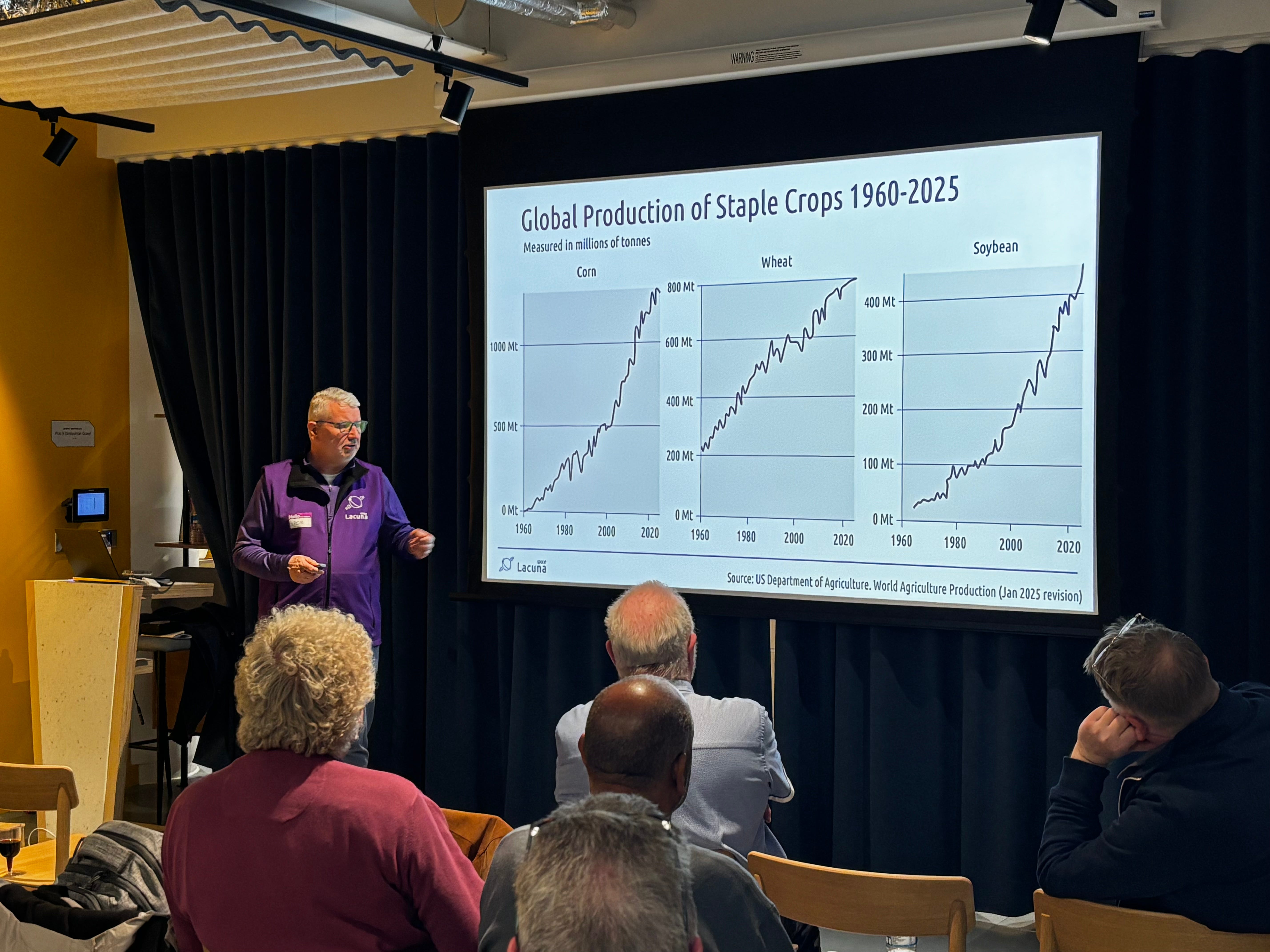
Rob covered the UK agriculture shift, how recent advancements in node technology are allowing UK farmers to bypass gaps in terrestrial connectivity and access real-time insights from their land. Sensors measuring soil moisture, air quality, soil quality and water quality can have a real impact on how farms operate, but only if the data can get out. For farms in isolated rural locations with no reliable cellular network, Lacuna’s direct-to-satellite IoT connectivity solves that problem. Low-power sensors transmitting data straight to orbit, no base station required. Backed by the UK and European Space Agencies, Lacuna is already deploying across agriculture, environmental monitoring and utilities. Rob framed the broader mission well: ending what he called the “data silence” in global food systems.
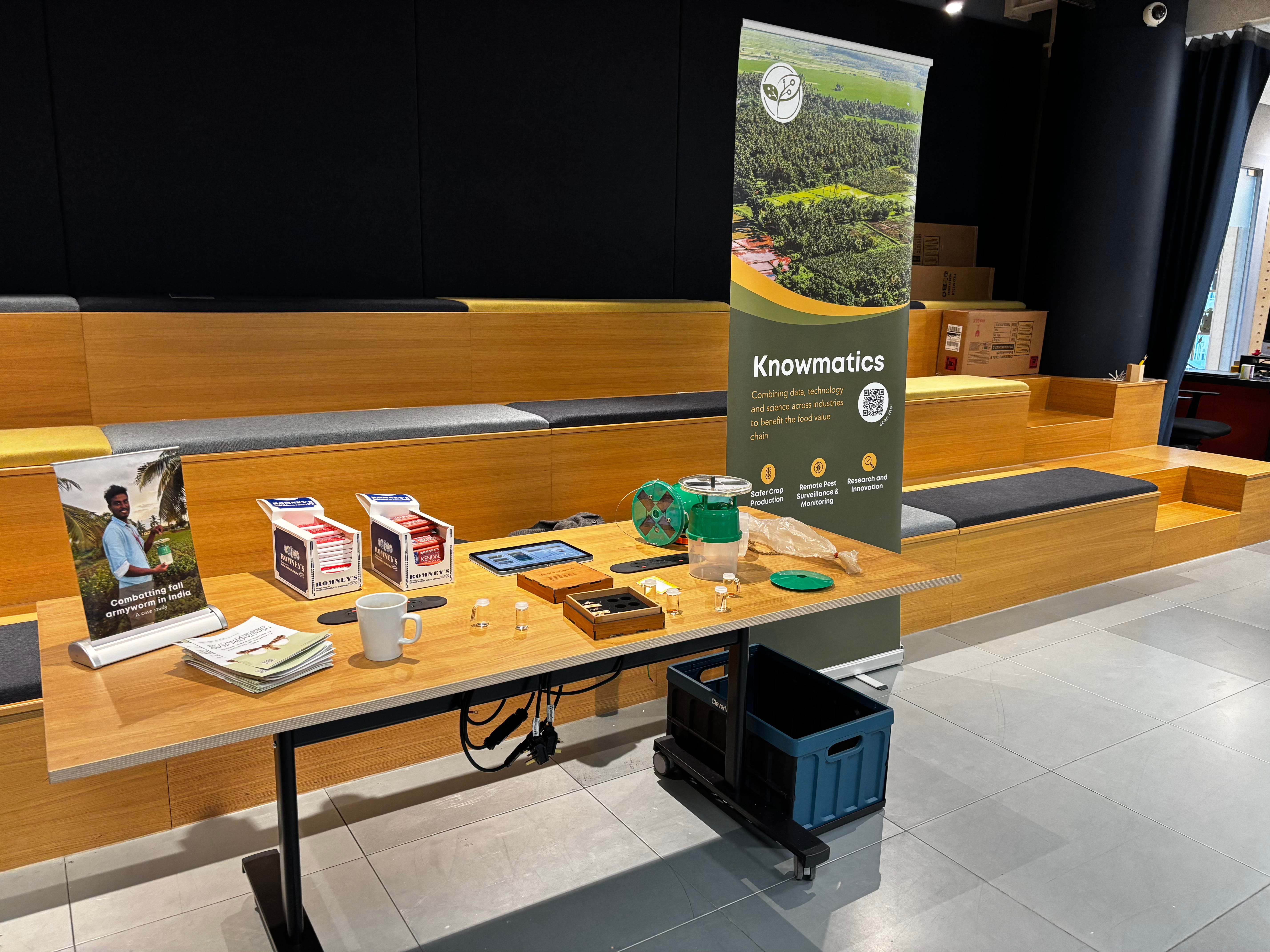
The third stand belonged to Derek Scuffell from Knowmatics. Derek demonstrated their IoT-connected insect trap, which uses pheromones to attract specific pests and then measures the volume of insects caught by location. It’s a smart approach to pest monitoring, giving farmers real data on what’s actually happening in their fields rather than relying on guesswork or blanket spraying. A good example of IoT solving practical, immediate problems on the farm, and it connected well with both of the evening’s talks.
The conversations over pizza and drinks afterwards ran longer than the talks themselves, which is always a good sign. People stayed because they had questions, because they’d found someone working on something adjacent to their own thing, or because they just wanted to keep talking about satellites and soil sensors. That’s the value of these evenings. The talks set the agenda, but the real connections happen around them.
Thanks to Billy, Rob and Derek for sharing their work, to Plus X Slough for hosting, and to everyone who came along and asked the tough questions.