

Urea hit seven hundred dollars a metric ton last month. That number probably means nothing to most people reading this, and it meant nothing to me until I started pulling at the thread. Before the strikes on Iran in late February, urea sat between four and five hundred dollars. It is, for anyone who hasn’t spent time thinking about what makes food grow, the most widely used fertiliser on earth. And roughly half of the world’s traded supply passes through a twenty-one mile gap between Iran and Oman that is now, depending on which day you check the news, either closed, barely open, or conditionally open if you coordinate with the Iranian armed forces first.
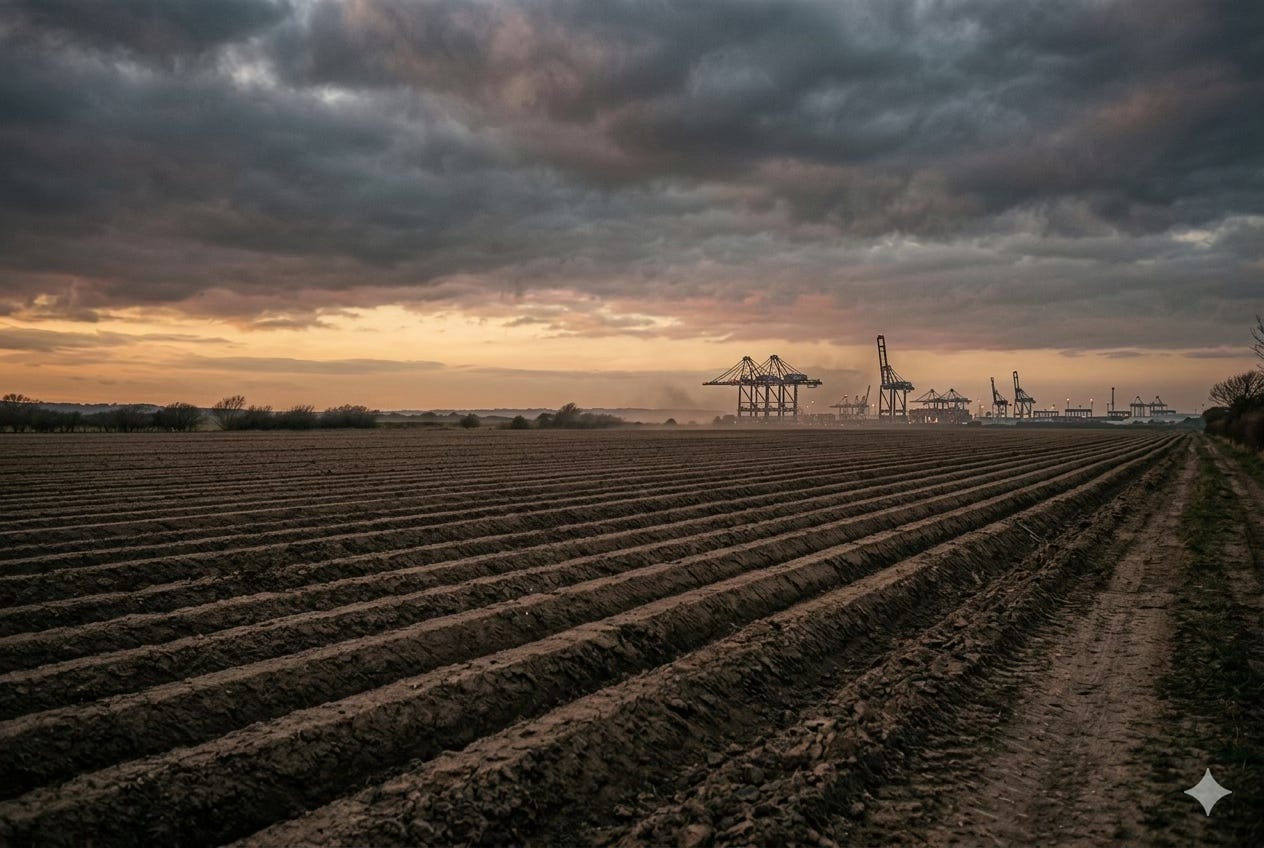
So far, so geopolitics. This is the kind of story that lands in the news cycle, gets a few concerned headlines about oil prices, and then drifts into the background noise of a world that seems to produce a new crisis every quarter. But look at what else flows through that strait, and the story starts connecting to something the IoT community talks about constantly without ever quite joining the dots.
When we talk about IoT in agriculture, and we talk about it a lot, the pitch is compelling and, in many cases, backed by solid evidence. Soil sensors measuring nutrient levels, pH, salinity in real time. Precision application systems that dose fertiliser exactly where it’s needed and nowhere else. The numbers that keep surfacing are a twenty to thirty percent reduction in fertiliser use and up to fifty percent less water. Those aren’t theoretical projections from a startup deck, they come from actual deployments and peer-reviewed research. And in a world where urea just jumped forty to fifty percent in price and farmers are heading into spring planting wondering whether they can afford their inputs, that pitch has never sounded more urgent. IoT precision agriculture isn’t a nice efficiency gain any more. It’s survival math.
The Strait of Hormuz doesn’t just carry fertiliser and oil. It carries helium. Thirty-five to forty percent of the global supply, mostly from Qatar, and it’s not the kind of commodity most people think about unless you work in semiconductor fabrication. Helium is what cools the equipment used to etch circuits onto silicon wafers at three and two nanometre scales. Without it, the fabs slow down. Without the fabs, you don’t get chips. Without chips, you don’t get sensors. You don’t get LoRaWAN modules or NB-IoT gateways or the microcontrollers sitting inside the soil probes that are supposed to help farmers use less of the fertiliser they can no longer afford.
Don’t Miss Our Next Meetup - Satellites, Agriculture & Hardware Design
Our next IoT Collective meetup is just around the corner and the lineup is one you won’t want to miss.
The same chokepoint that is driving up the cost of farming inputs is also threatening the supply chain for the technology we keep presenting as the answer to those rising costs. Both sides of the equation, the problem and the proposed fix, run through the same narrow waterway.
And it’s not just helium. Aluminium for hardware casings and heat sinks transits the Gulf. LNG powers the energy grid in Taiwan, which fabricates something like ninety percent of the world’s most advanced chips, and Taiwan imports roughly ninety-seven percent of its energy needs. A third of that LNG comes from Middle Eastern suppliers. So when the Strait closes, it’s not only that farmers pay more for nitrogen. It’s that the entire production chain for the sensors we want to put in their soil gets squeezed too. The rerouting around the Cape of Good Hope adds roughly nineteen days to shipping times and pushes insurance and transport costs up in ways that eventually land in the price of a finished device.
Picture a mid-size farm operator somewhere in the American Midwest or, closer to home, in the UK. The diesel bill is up seventeen percent. The fertiliser bill is up forty. Someone from an agtech company calls and says, look, we can help you use thirty percent less fertiliser with our sensor platform. And the economics of that probably do work out, at least on paper. But the sensor itself is going to cost more than it did six months ago, if it’s even in stock, because the supply chain that builds it is under the same pressure as the supply chain it’s trying to optimise. The farmer is being told the fire extinguisher works beautifully, which it might, but the factory that makes fire extinguishers is also on fire.
There’s a version of this observation that turns into a criticism of the IoT industry, and I want to be careful not to go there because I don’t think that’s fair or accurate. The technology works and the evidence is getting stronger. This isn’t a criticism of the people building these systems. What I’m noticing is something more like a gap in the conversation. When we present IoT agriculture at meetups, in articles, in investor decks, we tend to frame it as a solution to volatile input costs or climate unpredictability or labour shortages. And it is. But we rarely talk about the fact that IoT itself is subject to many of the same external pressures it promises to address. The supply chain for smart agriculture is not separate from the supply chain for agriculture. They overlap, they share vulnerabilities, and when something like a war in the Gulf disrupts one, it disrupts both.
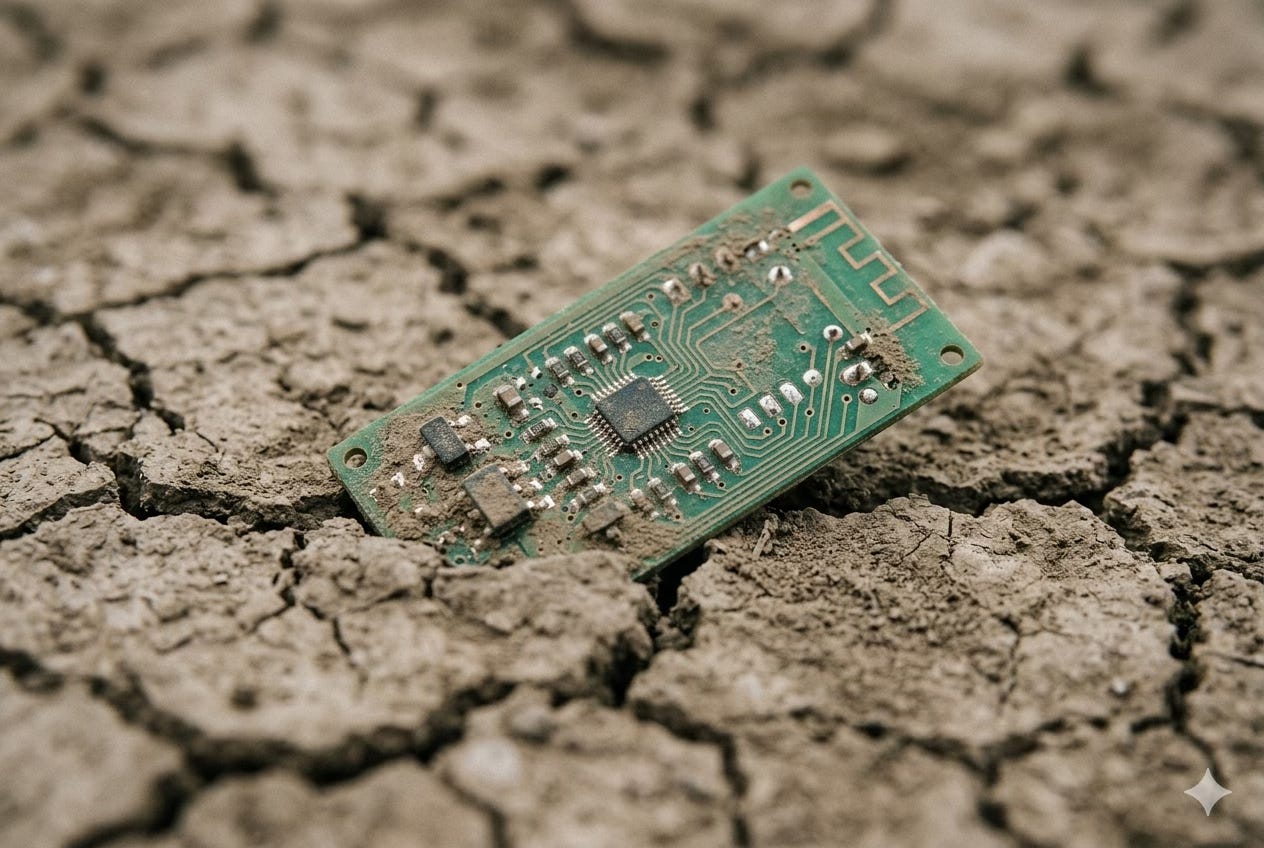
The ceasefire that was announced on the eighth of April hasn’t changed this much in practice. A handful of ships have trickled through the Strait since the deal was brokered, but traffic hasn’t recovered anything close to normal levels. Trump has accused Iran of doing a poor job reopening the waterway. Iran says passage requires coordination with its armed forces. The talks in Islamabad are ongoing and fragile. Meanwhile, the Foreign Policy analysis from just two days ago argues that even the ceasefire hasn’t stopped the energy and fertiliser shocks from propagating. These things have momentum. Even if the Strait fully reopens tomorrow, the price signals have already cascaded through planting decisions and procurement contracts. The schedules are set. The damage isn’t theoretical. It’s in the ground already, or rather, it’s in what didn’t get put in the ground because someone couldn’t justify the cost.
What sits with me most is what this means for how we talk about resilience in the IoT space. We use that word a lot. Resilient systems, resilient infrastructure, resilient agriculture. But resilience means something specific, which is the ability to absorb a shock and keep functioning. And what the Hormuz situation reveals is that the system we’re building, IoT-enabled precision farming, shares a critical dependency with the system it’s meant to make more resilient. Which is less a flaw than a design reality nobody seems to talk about, and I think it’s worth discussing.
Forty-five million more people are projected to be pushed into acute hunger because of rises in food, oil, and shipping costs from this conflict. That number comes from the World Food Programme and it’s the kind of statistic that makes everything else feel small. The IoT community isn’t going to solve that. But it is part of a conversation about how agriculture adapts to a world where the inputs it depends on can be disrupted by events thousands of miles from the field. And if we’re going to be part of that conversation honestly, we probably need to acknowledge that our own supply chains run through the same chokepoints.
I don’t know what the practical takeaway is here, and I’m suspicious of anyone who says they do with confidence this early into the crisis. Maybe it’s a case for more localised manufacturing of IoT hardware. It could be about diversifying the semiconductor supply chain, which is already a conversation happening at national policy level but rarely connects down to the agtech world. Or perhaps it’s just about being more honest in how we frame the value proposition. Something closer to “sensors help, and they’re subject to some of the same forces you are, and we should probably talk about both of those things at the same time.”
The strait that carries the fertiliser carries the helium that makes the chips that go in the sensors that reduce the need for the fertiliser. It’s the same twenty-one miles. And until that loop is more widely understood, I think we’re telling a simpler story than reality allows.
Reference links
The Iran War’s Hidden Front: Food, Water, and Fertilizer (Council on Foreign Relations)
Beyond oil: 9 commodities impacted by Hormuz crisis (World Economic Forum)
Strait of Hormuz: A New Risk Point for the Semiconductor Supply Chain (Al Habtoor Research Centre)
Hormuz Disruption Reveals a Hidden Helium Bottleneck (DirectIndustry)
Strait of Hormuz semiconductor and AI impact (Tom’s Hardware)
Not just energy: How the Iran war could trigger a global food crisis (Al Jazeera)
Iran war ceasefire doesn’t stop energy/fertilizer shocks (Foreign Policy)
Integration of smart sensors and IoT in precision agriculture (Frontiers in Plant Science)